Enzo Ferrari sold his first car in 1947, a 125 S with a 1.5-liter V12 that howled like nothing else on the road. He didn't have a grand marketing plan. He had a simple belief: build the best race car, and the road cars will sell themselves. That belief turned a small workshop in Maranello into a global symbol of speed and exclusivity. Today, Ferrari's market capitalization hovers around $70 billion。more than Ford and General Motors combined. For a company that delivered just 13,663 cars in 2023, that valuation isn't about volume—it's about desire.Ferrari's road cars are engineered to be driven hard。
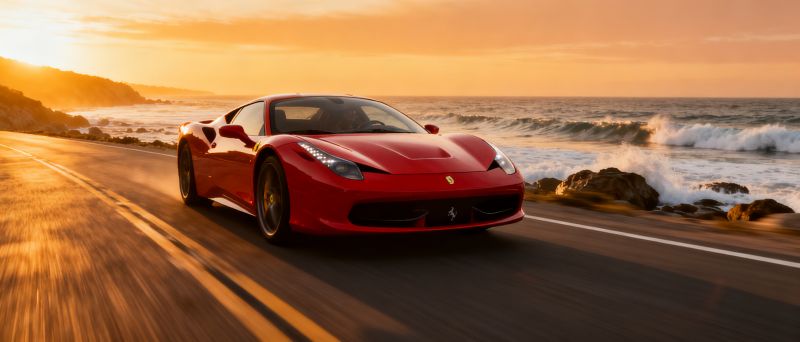
but most never see a track. The average Ferrari owner drives fewer than 5,000 miles a year. That's fine with Ferrari. The company deliberately caps production to keep demand high and residuals strong. Waitlists for models like the Purosangue stretch beyond two years in some markets. This scarcity isn't a bug;it's the core of Ferrari's business model. When you buy a Ferrari, you're not just buying a car—you're buying entry into a club that money alone can't always unlock. Ferrari even vets first-time buyers of limited-edition models, ensuring the cars go to enthusiasts who will drive them, not flip them for profit.The racing DNA matters more than the marketing department likes to admit. Ferrari is the only team to have competed in every Formula 1 season since the championship began in 1950. That's 16 constructors' titles and 15 drivers' titles, though the last drivers' championship came in 2007 with Kimi Räikkönen. The drought stings. Tifosi—the passionate Ferrari faithful—don't just want wins;they expect them. That pressure filters down to the road cars. The SF90 Stradale。Ferrari's first plug-in hybrid, produces 986 horsepower from a twin-turbo V8 and three electric motors. It's a technical masterpiece, but it's also a compromise. Purists grumbled about the hybrid system. Ferrari responded with the 296 GTB, a V6 hybrid that sounds sharper and drives lighter. The lesson: Ferrari listens, but on its own terms.
What does the future hold?Ferrari has promised its first fully electric model by 2025, a prospect that makes some longtime fans uneasy. An electric Ferrari sounds like an oxymoron—where's the screaming V12。
the smell of unburned fuel, the mechanical drama?But Ferrari isn't building a Prius. The electric model will likely cost well over $500,000 and target the lucrative Asian and Middle Eastern markets where silent luxury trumps old-school noise. Meanwhile, the company continues to invest in its Icona series—retro-styled limited editions like the Daytona SP3—which sell out before they're even officially unveiled. Ferrari's ability to charge seven figures for a car with a 1960s-inspired body and a modern V12 proves that nostalgia, when executed with precision, is a renewable resource.Ferrari's real genius isn't engineering or racing heritage. It's understanding that a car can be more than transportation. It can be a statement, an heirloom。a middle finger to practicality. The company sells roughly 14,000 cars a year, yet its brand value exceeds that of much larger automakers. That's not a fluke. It's the result of decades of refusing to dilute the product, of saying no to SUVs for years (until the Purosangue), of keeping production low and prices high. Ferrari doesn't chase trends;it creates them. And in an industry racing toward autonomy and electrification, that stubbornness might be its most valuable asset.