Every year, millions of piglets are moved across Germany's roads and borders. The scale is staggering: roughly 25 million piglets are born in the country annually, and a significant share—estimates hover around 10 to 12 million—are exported。primarily to the Netherlands, Poland, and Denmark. These are not abstract numbers;they represent a highly specialized, industrialized system that has shaped rural economies in Lower Saxony and North Rhine-Westphalia for decades. The term "Piglet Germany" isn't just a search query;it points to a tight, often controversial supply chain that few consumers ever see.
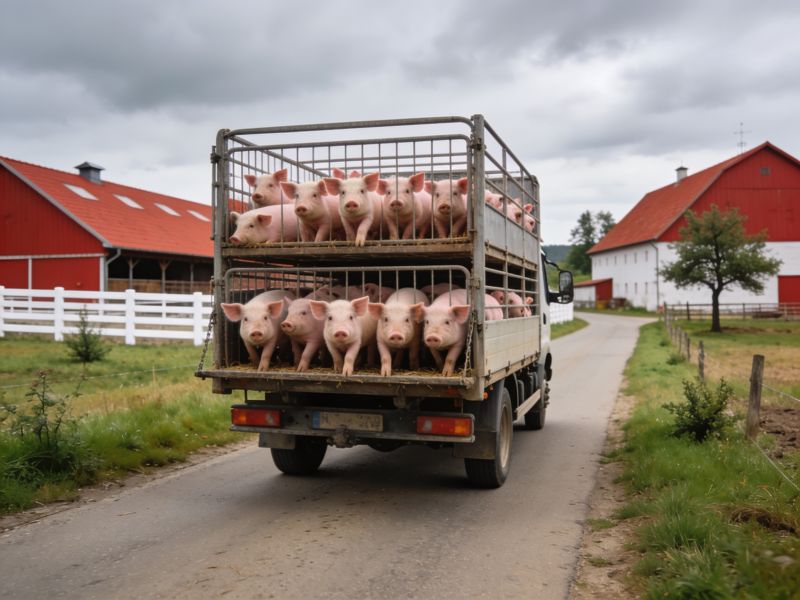
Standing in a dimly lit barn in Emsland last spring。I watched a farmer load three-week-old piglets into a transport truck. The animals squealed, huddled in groups, and the farmer—who asked not to be named—shook his head. "We used to keep them until slaughter weight," he said. "Now the margins are so thin that selling piglets is the only way to survive." That shift is the core of Piglet Germany: a structural move from integrated farms to specialized breeding operations that sell young animals to fattening farms abroad. The reasons are economic—feed costs, environmental regulations, and labor shortages—but the consequences ripple through animal welfare debates, disease control, and local politics.German piglet production is concentrated in a handful of regions, and the density is striking. In some districts of Lower Saxony, there are more pigs than people—over 2。000 pigs per square kilometer in hotspots. This concentration has made Germany one of Europe's largest piglet exporters, but it has also turned the country into a flashpoint for criticism. Veterinary officials have repeatedly warned about the stress of long-distance transport on such young animals;a 2021 report from the Friedrich Loeffler Institute noted elevated mortality rates during and after transport, especially for piglets under 21 days old. Yet the trade persists because the price gap between German-born piglets and those from other EU countries remains wide enough to justify the logistics.What's often overlooked is how Piglet Germany fits into a broader European market. Dutch and Polish fattening farms buy German piglets because they can raise them more cheaply—lower land costs, looser zoning rules, and access to non-German feed. The result is a kind of relay race: a piglet born in Cloppenburg might be weaned on Tuesday, trucked to Venlo on Wednesday, and slaughtered in Poland by autumn. This cross-border choreography is efficient on paper, but it complicates traceability and disease containment. When African swine fever appeared in wild boar populations in Brandenburg in 2020, export bans hit piglet producers almost overnight。exposing how fragile the system is.
There are signs of change, though not necessarily in the direction animal welfare advocates hope. Some German states have tightened rules on transport age and barn space, pushing smaller breeders out of the market. Meanwhile, a few cooperatives are experimenting with "closed-loop" systems where piglets stay on the same farm from birth to slaughter—a throwback that appeals to niche consumers but struggles against the scale economics of the mainstream. For anyone tracking Piglet Germany。the story is less about a single trend and more about a stubborn equilibrium: high-volume, low-margin production that keeps rural jobs alive while drawing constant scrutiny. The farmer in Emsland put it bluntly: "We're not proud of everything, but we're not shutting down either." That tension defines the industry as much as any statistic.